
Manufacturing Process

Low-Volume Production

Low-volume production supports small-batch custom plastic and metal parts before full mass production. It is suitable for market testing, engineering trial runs, replacement parts, and flexible production quantities.

2 Services
0 Projects

Related Services

2 services under this process

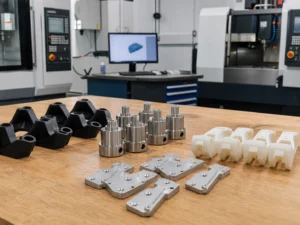
Small batch of custom plastic and metal parts prepared for low-volume production review

Low-Volume Production Services

Low-Volume Production Services for Custom Plastic and Metal Parts Low-volume production is suitable for customers who need custom parts in smaller quantities before moving into larger production. It helps reduce early production risk, test market demand, verify product performance, and support projects that do not require full mass production at the beginning. Yinuomold provides low-volume […]

Low-volume production accuracy depends on the selected manufacturing process, material, part structure, tooling method, and inspection requirements. CNC machined parts can support tighter dimensional control, while molded or die cast parts are reviewed based on tooling and production conditions. ±Typical tolerance can range from ±0.01 mm to ±0.20 mm depending on CNC machining, injection molding, die casting, material type, part geometry, and drawing requirements. Critical dimensions can be reviewed before production.
View Service
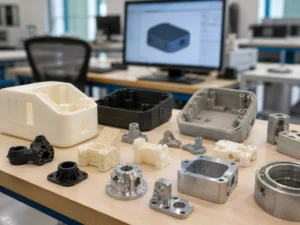
Custom plastic and metal prototype samples displayed on an engineering workbench

Rapid Prototyping Services

Rapid Prototyping for Custom Plastic and Metal Parts Rapid prototyping helps customers test a design before investing in tooling or mass production. For many custom plastic and metal parts, a prototype can help confirm structure, assembly fit, material selection, surface appearance, and possible manufacturing risks at an early stage. Yinuomold supports rapid prototyping for OEM […]

Depends on the selected process, material, and part structure. CNC machined prototypes can support tighter dimensional control, while 3D printed prototypes are mainly used for structure, appearance, and design verification. ±Typical prototype tolerance can range from ±0.05 mm to ±0.20 mm depending on the process, geometry, material, and inspection requirements. Tighter tolerance can be reviewed according to drawings.
View Service

Project Cases

0 projects using this process

No project cases found for this process yet.

Need Low-Volume Production for Your Project?

Send us your drawings or samples -- we'll provide a free DFM evaluation and quote.