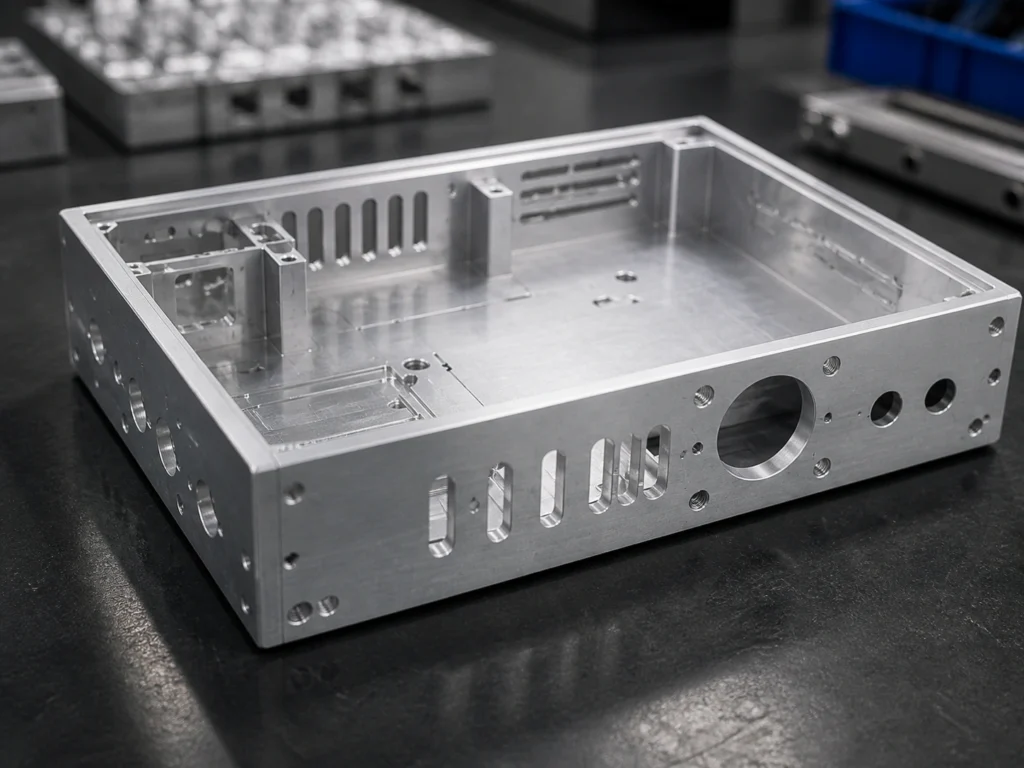
Deburring
Removes sharp edges and burrs after CNC milling to improve handling safety and assembly quality.
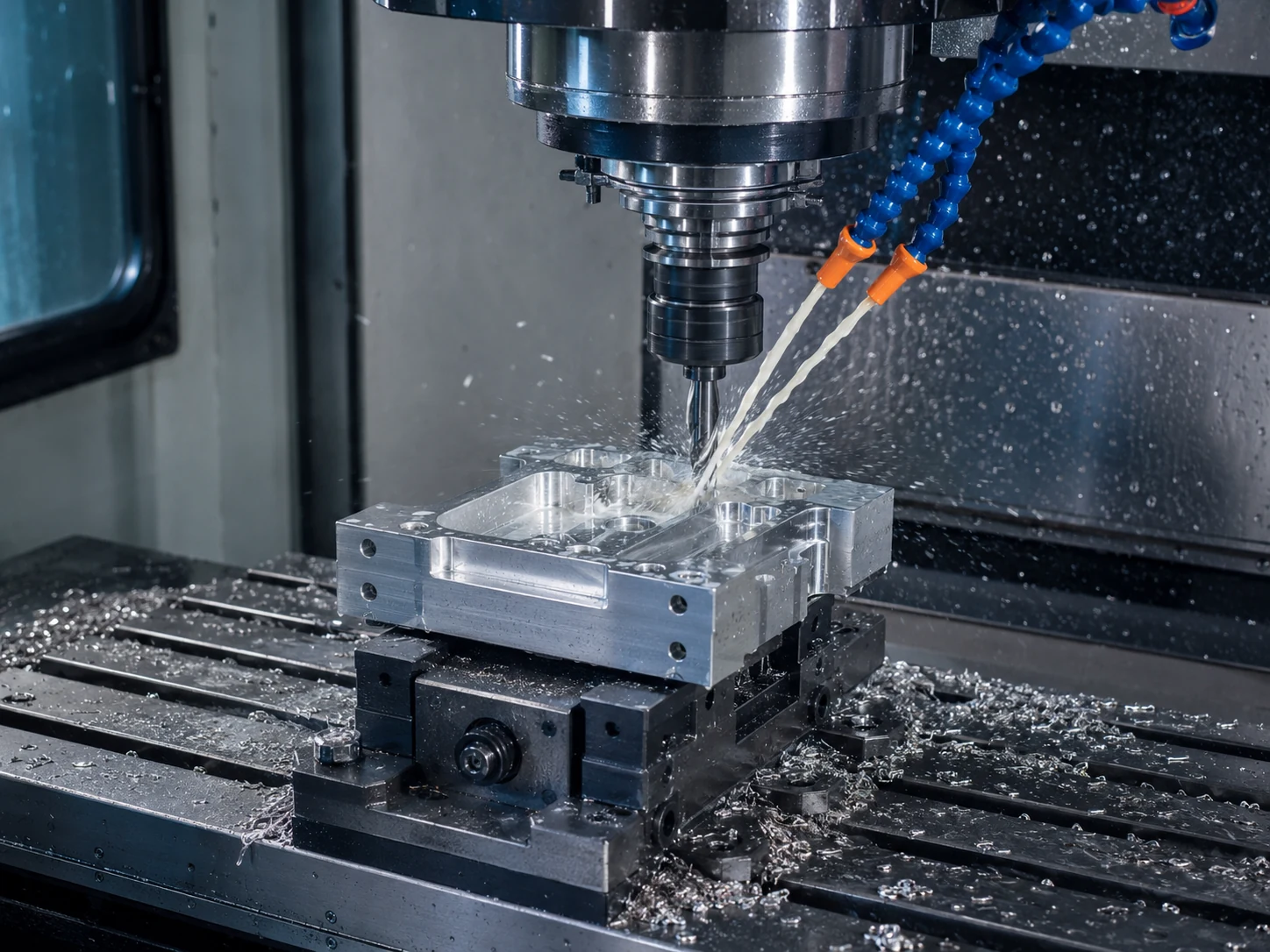
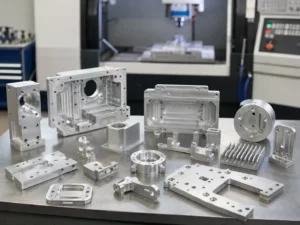
Yinuo Mold provides custom CNC milling services for precision metal and plastic components. CNC milling is suitable for parts with flat surfaces, pockets, slots, holes, threads, contours, cavities, complex profiles, and multi-side machining features. We support prototype CNC milling, low-volume CNC milling, and production machining based on customer 2D drawings, 3D models, material requirements, tolerance needs, surface finish requirements, and assembly applications. Our CNC milling service is commonly used for aluminum housings, stainless steel parts, steel brackets, plastic prototypes, mechanical components, fixtures, plates, blocks, and custom machined parts. For parts that require both milling and turning features, we can also provide combined CNC milling and turning solutions to complete complex custom components with stable dimensions and reliable machining quality.
Capability Details
Yinuo Mold provides custom CNC milling services for precision metal and plastic components. CNC milling is widely used to manufacture parts with flat surfaces, pockets, slots, holes, threads, contours, cavities, and complex machined features.
We manufacture CNC milled parts according to customer 2D drawings, 3D models, material requirements, tolerance needs, surface finish requirements, and production quantities. Our CNC milling service can support prototypes, low-volume parts, and production components for industrial equipment, automotive parts, consumer electronics, mechanical assemblies, fixtures, and custom product development.
CNC milling removes material from a workpiece using rotating cutting tools. It is suitable for parts that require accurate holes, slots, pockets, flat surfaces, stepped features, complex profiles, and multi-side machining.
This process is commonly used for aluminum housings, metal brackets, plates, blocks, fixtures, plastic prototypes, stainless steel components, mechanical parts, and custom machined components that require stable accuracy and repeatable quality.
We support a range of metal and plastic materials for CNC milling. Common materials include aluminum, aluminum alloy, stainless steel, steel, brass, POM, nylon, PC, ABS, and other engineering materials depending on the application.
Material selection depends on strength, weight, corrosion resistance, wear resistance, dimensional stability, appearance requirements, machining difficulty, and the final working environment of the component.
For standard parts, 3-axis CNC milling can complete many flat surfaces, holes, slots, pockets, and contour features. For more complex parts that require multi-side machining, angled features, or reduced setups, 4-axis milling can help improve machining efficiency and dimensional consistency.
Our team can review your part structure and recommend a suitable CNC milling process based on geometry, tolerance, material, quantity, and cost requirements.
Typical CNC milling precision can reach ±0.01 mm to ±0.05 mm depending on material, part size, geometry, wall thickness, machining surface, and inspection requirements.
For tight tolerance CNC milled parts, we recommend providing complete 2D drawings with critical dimensions, tolerance notes, hole requirements, thread specifications, surface roughness, and assembly-related dimensions. Our team can review the drawings before production and confirm the most suitable machining plan.
Yinuo Mold supports prototype CNC milling, low-volume CNC milling, and production CNC milling. For prototype projects, we help customers verify design, fit, function, and assembly before tooling or mass production. For production parts, we focus on stable machining process, repeatable dimensions, consistent surface finish, and reliable batch quality.
If your project requires both milling and turning features, we can also support combined CNC milling and turning solutions to complete complex custom parts with holes, flats, slots, threads, grooves, and cylindrical features.
To meet functional and appearance requirements, CNC milled parts can be supplied with different surface finishing options. Common finishes include deburring, polishing, brushing, bead blasting, sandblasting, anodizing, black anodizing, hard anodizing, passivation, black oxide, nickel plating, zinc plating, powder coating, painting, and heat treatment.
The best surface treatment depends on material, corrosion resistance requirements, appearance expectations, assembly conditions, and end-use environment.
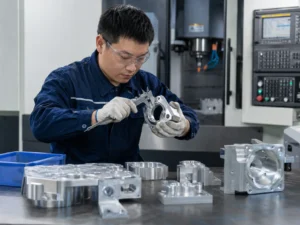
Quality control starts from drawing review and material confirmation. During production, key dimensions are checked to maintain machining stability. After machining, parts can be inspected for hole size, thread quality, flatness, slot width, pocket depth, surface finish, burrs, appearance, and critical assembly dimensions.
For custom CNC milled parts with strict tolerance requirements, we recommend clearly marking critical dimensions on the drawing so that inspection can focus on the most important functional areas.
Send us your 2D drawings, 3D files, material requirements, quantity, tolerance notes, and surface finish requirements. Our team will review your project and provide a suitable CNC milling solution for prototype, low-volume, or production parts.
Finishing Options
Removes sharp edges and burrs after CNC milling to improve handling safety and assembly quality.
Improves surface smoothness and appearance for visible or functional machined parts.
Creates a uniform linear texture on aluminum, stainless steel, and other metal surfaces.
Produces a matte surface finish and helps reduce minor machining marks.
Creates a consistent textured surface before anodizing, coating, or painting.
Commonly used for aluminum CNC milled parts to improve corrosion resistance and appearance.
Provides a black protective finish for aluminum machined housings and components.
Improves surface hardness and wear resistance for aluminum parts.
Used for stainless steel parts to improve corrosion resistance after machining.
Provides a black finish for steel machined components and helps improve surface protection.
Adds corrosion resistance, wear resistance, and improved surface appearance.
Provides economical corrosion protection for steel CNC milled parts.
Suitable for larger metal housings, brackets, and visible components requiring durable colored coating.
Used for appearance parts, housings, and components requiring specific color or surface protection.
Used when machined parts require improved hardness, strength, or wear resistance.
Inspection Before Shipment
Key inspection items are organized into visible checkpoints so overseas buyers can quickly understand how the service is controlled before delivery.
Review 2D drawings, 3D files, tolerances, material, surface finish, threads, holes, and critical dimensions before production.
Confirm material type and grade according to customer requirements before machining.
Review machining method, clamping, cutting direction, and key machining features before production.
Inspect the first finished part before batch production to confirm dimensions and machining process stability.
Check key dimensions during machining to reduce batch errors and maintain repeatability.
Check hole diameter, depth, position, countersink, tapped holes, and thread quality according to drawing requirements.
Inspect flat surfaces, mating faces, surface marks, burrs, and visible machining defects.
Use calipers, micrometers, height gauges, plug gauges, thread gauges, and other tools to inspect important dimensions.
Inspect surface finish, tool marks, scratches, coating quality, and finish consistency.
Perform final dimensional and visual inspection before packing and shipment.
Confirm part quantity, labeling, protection, and export packing before delivery.
Manufacturing References
Send drawings, samples, target material, quantity, and finishing requirements. Yinuomold can support DFM review, prototyping, mold making, machining, finishing, and export delivery.