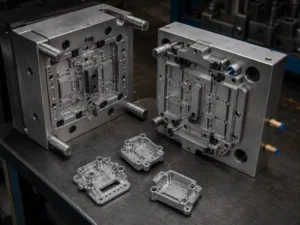
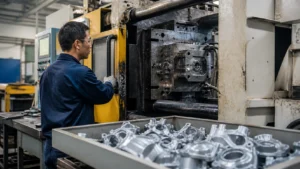
Die casting is used for producing custom metal parts by injecting molten aluminum alloy or zinc alloy into a mold under high pressure. It is suitable for metal housings, electronic enclosures, automotive-related parts, lighting components, motor housings, and industrial components that require stable shape, repeatable production, and secondary processing support.
4Services
1Projects
Related Services
4 services under this process
Mass Production Services
Mass Production Services for Custom Plastic and Metal Parts Mass production is suitable for customers who have confirmed their product design, approved samples, and need stable batch production for custom plastic or metal parts. Yinuomold provides mass production services for OEM buyers, product developers, importers, engineering companies, and brand owners who need custom parts produced […]
▹
Mass production accuracy depends on the selected manufacturing process, material, part structure, tooling condition, production quantity, and inspection requirements. Critical dimensions are reviewed before production and controlled according to approved drawings or agreed inspection standards. ▹
±Typical tolerance can range from ±0.01 mm to ±0.20 mm depending on CNC machining, injection molding, die casting, material type, tooling condition, and part geometry. Critical tolerance points can be reviewed and confirmed before mass production.
Low-Volume Production Services for Custom Plastic and Metal Parts Low-volume production is suitable for customers who need custom parts in smaller quantities before moving into larger production. It helps reduce early production risk, test market demand, verify product performance, and support projects that do not require full mass production at the beginning. Yinuomold provides low-volume […]
▹
Low-volume production accuracy depends on the selected manufacturing process, material, part structure, tooling method, and inspection requirements. CNC machined parts can support tighter dimensional control, while molded or die cast parts are reviewed based on tooling and production conditions. ▹
±Typical tolerance can range from ±0.01 mm to ±0.20 mm depending on CNC machining, injection molding, die casting, material type, part geometry, and drawing requirements. Critical dimensions can be reviewed before production.
Rapid Prototyping for Custom Plastic and Metal Parts Rapid prototyping helps customers test a design before investing in tooling or mass production. For many custom plastic and metal parts, a prototype can help confirm structure, assembly fit, material selection, surface appearance, and possible manufacturing risks at an early stage. Yinuomold supports rapid prototyping for OEM […]
▹
Depends on the selected process, material, and part structure. CNC machined prototypes can support tighter dimensional control, while 3D printed prototypes are mainly used for structure, appearance, and design verification. ▹
±Typical prototype tolerance can range from ±0.05 mm to ±0.20 mm depending on the process, geometry, material, and inspection requirements. Tighter tolerance can be reviewed according to drawings.
Die Casting Services for Custom Metal Parts Yinuomold provides die casting services for custom aluminum alloy and zinc alloy parts. We support B2B customers from mold trial and sample production to low-volume production, mass production, post-machining, surface finishing, inspection, packaging, and delivery. Our die casting services are suitable for metal housings, electronic enclosures, automotive-related parts, […]
▹
Depends on part structure, mold condition, material, and post-machining requirements. ▹
±As specified in customer drawings or confirmed during sample approval.
Zinc Alloy Die Casting Mold for Electronic Component
A B2B customer needed a custom zinc alloy die casting mold for an electronic component used in a small device assembly. The part required a stable shape, clear mounting positions, practical surface quality, and repeatable production after mold trial.
The project involved drawing review, DFM evaluation, die casting mold making, mold fitting, trial support, sample checking, and mold modification based on trial feedback.