Browse our full range of materials used across CNC machining, injection molding, and die casting -- from engineering plastics to high-performance metals.
Metal
10 Materials
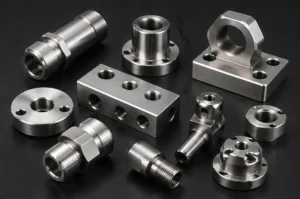
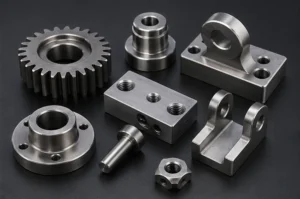
Metal materials are commonly used for CNC machined parts that require strength, durability, dimensional stability, and different surface finish options.
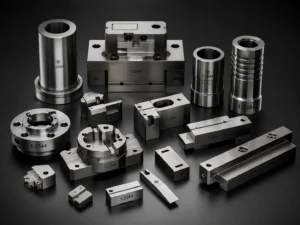
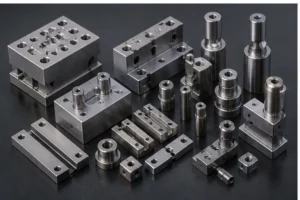
1.2344 mold steel is a hot work tool steel commonly used for mold making applications that require heat resistance, wear resistance, toughness, and stable tooling performance. It is often used for die casting molds, plastic injection molds, mold cavities, cores, inserts, sliders, and other precision tooling components used in repeated production cycles.
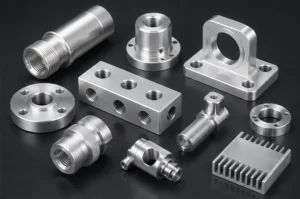
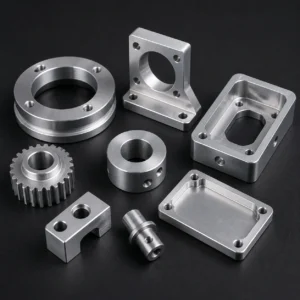
Aluminum is a widely used metal material for custom CNC machined parts. It has light weight, good machinability, corrosion resistance, and a high strength-to-weight ratio, making it suitable for prototypes, housings, brackets, covers, structural parts, and precision metal components.
Lightweight
Aluminum is lighter than many other metals and is suitable for parts that require weight reduction.
Good Machinability
Aluminum is easy to CNC machine and suitable for prototypes, low-volume parts, and precision machined components.
Strength-to-Weight Ratio
Aluminum offers a good balance between strength and weight for structural and functional components.
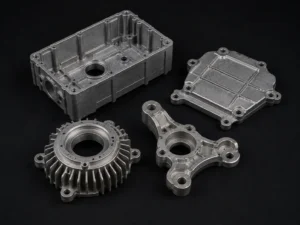
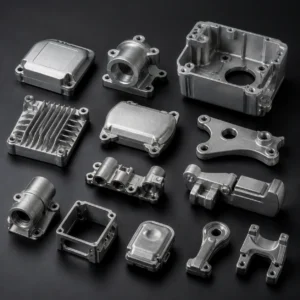
Aluminum alloy is a lightweight metal material with good strength, corrosion resistance, machinability, and thermal conductivity. It is commonly used for CNC machined parts, die casting parts, housings, brackets, heat sink structures, and custom metal components. Different aluminum alloy grades can be selected based on strength, surface finish, machining requirements, and production method.
Material Type
Lightweight metal alloy
Main Processes
CNC machining, die casting, post-machining
Key Features
Lightweight, machinable, corrosion resistant, good thermal conductivity
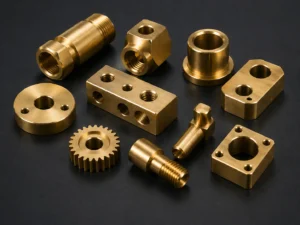
Brass is a commonly used copper alloy for custom CNC machined parts. It has good machinability, corrosion resistance, electrical conductivity, and a clean surface appearance, making it suitable for fittings, connectors, bushings, threaded parts, and precision metal components.
Good Machinability
Brass is easy to machine and suitable for precision CNC turned and milled parts.
Corrosion Resistance
Brass provides suitable corrosion resistance for many indoor, mechanical, and fluid-related applications.
Electrical Conductivity
Brass can be used for parts that require moderate electrical conductivity, depending on the application.
H13 mold steel is a commonly used hot work tool steel for mold making applications. It offers good toughness, wear resistance, heat resistance, and thermal fatigue resistance after proper heat treatment. H13 is often used for die casting molds, plastic injection molds, mold cavities, cores, inserts, and other tooling components that need to withstand repeated production cycles.
Magnesium and magnesium alloy are lightweight metal materials used for custom die casting, CNC machining, prototype parts, and functional metal components. Magnesium alloy is often selected when a part requires low weight, good strength-to-weight ratio, dimensional stability, heat dissipation, and metal housing performance.
Magnesium die casting is commonly used for lightweight housings, electronic enclosures, automotive parts, handheld device components, mechanical parts, and structural components where weight reduction is important. Compared with aluminum alloy, magnesium alloy can provide lower density, but the manufacturing process, surface protection, corrosion resistance, and machining safety requirements should be reviewed carefully.
Yinuo Mold can support magnesium material and process review for custom magnesium parts, including magnesium die casting feasibility, magnesium alloy casting parts, CNC post-machining, surface treatment, low-volume trial production, and mass production according to customer drawings, 3D files, tolerance requirements, surface finish requirements, and application conditions.
Material Name
Magnesium / Magnesium Alloy
Material Type
Lightweight metal alloy
Density
Lower density than aluminum alloy, suitable for lightweight parts
SKD61 mold steel is a hot work tool steel commonly used for mold making applications that require heat resistance, wear resistance, toughness, and stable tooling performance. It is often used for die casting molds, plastic injection molds, mold cavities, cores, inserts, sliders, and other precision mold components used in repeated production cycles.
Stainless steel is a widely used metal material for custom CNC machined parts. It offers good corrosion resistance, mechanical strength, durability, and surface finish options, making it suitable for industrial components, structural parts, shafts, brackets, fasteners, and precision metal components.
Corrosion Resistance
Stainless steel provides good corrosion resistance for parts used in industrial, mechanical, and general functional applications.
Mechanical Strength
Stainless steel offers good strength and durability for structural and functional metal components.
Wear Resistance
Stainless steel can be suitable for parts that require wear resistance and stable long-term performance.
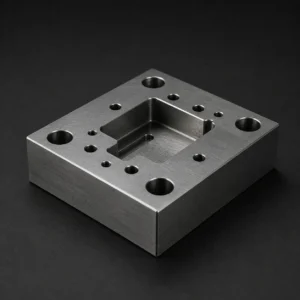
Steel is a commonly used metal material for custom CNC machined parts. It offers good strength, toughness, wear resistance, and cost-effective mechanical performance, making it suitable for industrial components, structural parts, brackets, shafts, fixtures, and custom metal parts.
Mechanical Strength
Steel provides good mechanical strength for structural and functional metal components.
Good Toughness
Steel can offer good toughness and durability depending on the material grade and heat treatment requirements.
Wear Resistance
Steel is suitable for parts that require wear resistance, especially when the correct grade or surface treatment is selected.
Zinc alloy is a metal material commonly used for die casting parts that require good dimensional stability, fine surface detail, and practical strength. It is suitable for small to medium-sized metal components, electronic parts, housings, connectors, brackets, and custom structural parts. Zinc alloy can support high-volume die casting production and various secondary processes such as deburring, polishing, electroplating, painting, and assembly.
Material Type
Die casting metal alloy
Main Processes
Die casting, deburring, surface finishing, post-processing
Key Features
Good dimensional stability, fine surface detail, suitable for small metal parts
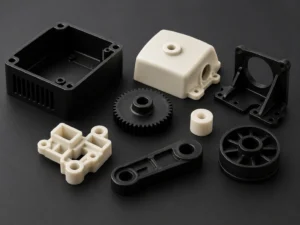
Plastic materials are commonly used for CNC machined prototypes, injection molded parts, housings, covers, and functional components with different performance requirements.
ABS is a widely used engineering plastic for custom plastic parts. It offers good impact resistance, toughness, dimensional stability, and processability, making it suitable for injection molded parts, CNC machined prototypes, housings, covers, and functional plastic components.
Impact Resistance
ABS provides good impact resistance for plastic parts that require toughness and durability.
Good Toughness
ABS has good toughness and is suitable for housings, covers, brackets, and general functional plastic parts.
Good Processability
ABS is easy to process by injection molding and can also be CNC machined for prototypes or low-volume parts.
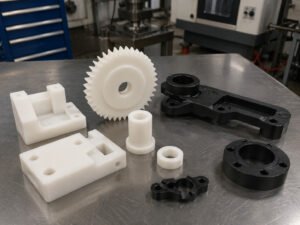
Nylon is an engineering plastic commonly used for custom machined and molded parts. It offers good toughness, wear resistance, low friction, and mechanical strength, making it suitable for functional plastic components used in industrial equipment, mechanical assemblies, and custom product applications.
Good Mechanical Strength
Nylon provides good strength and toughness for functional plastic parts that need mechanical performance.
Good Toughness
Nylon has good impact resistance and toughness compared with many general-purpose plastics.
Wear Resistance
Nylon is often used for parts that require wear resistance, such as gears, rollers, bushings, and sliding components.
PBT and PET are thermoplastic polyester materials used for custom injection molded plastic parts, functional components, electrical parts, automotive components, connectors, housings, covers, brackets, gears, and industrial plastic parts.
PBT is commonly selected for good dimensional stability, electrical insulation, heat resistance, chemical resistance, and stable molding performance. It is widely used in electrical connectors, automotive parts, appliance components, motor parts, switches, housings, and precision plastic components.
PET is also a polyester material and can be used for molded plastic parts that require strength, stiffness, chemical resistance, and dimensional stability. In some markets, PET mould may refer to PET preform molds or PET injection molding applications, so the final material and molding process should be reviewed according to the actual part structure and product use.
Yinuo Mold can support PBT and PET material review, injection mold design, plastic injection molding, CNC prototype review, low-volume production, and mass production based on customer drawings, 3D files, material requirements, tolerance needs, surface finish requirements, and application conditions.
Material Name
PBT / PET
Material Type
Thermoplastic polyester plastic
Common Grades
PBT, PET, glass-filled PBT, reinforced PET depending on project requirements
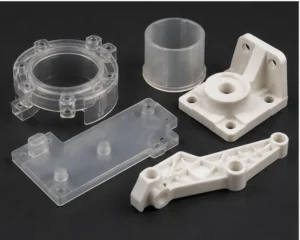
PC, also known as polycarbonate, is an engineering plastic with good impact resistance, transparency, dimensional stability, and heat resistance. It is commonly used for custom plastic parts that require strength, visual clarity, and stable performance in functional applications.
Impact Resistance
Good impact resistance for functional plastic parts that require toughness and durability.
Transparency
PC can be used for transparent or semi-transparent parts depending on the grade and surface requirements.
Heat Resistance
PC offers better heat resistance than many general-purpose plastics and can be used in certain temperature-sensitive applications.
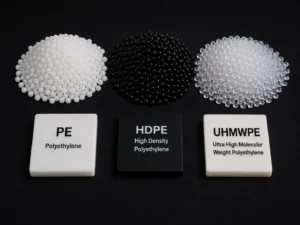
PE, HDPE, and UHMWPE are polyethylene-based plastic materials used for custom molded and machined plastic parts. These materials are known for low moisture absorption, good chemical resistance, low friction, impact resistance, and good performance in many industrial and functional plastic applications.
HDPE is commonly used for injection molded plastic parts, covers, containers, industrial components, wear-resistant parts, and chemical-resistant plastic components. UHMWPE offers excellent wear resistance and low friction, making it suitable for guide rails, sliding blocks, wear strips, bushings, liners, and machined plastic components.
Yinuo Mold can support PE and HDPE material review, injection molding, mold design, CNC prototype machining, low-volume production, and mass production for custom polyethylene parts based on customer drawings, 3D files, material requirements, tolerance needs, and application conditions.
Material Name
PE / HDPE / UHMWPE
Material Type
Polyethylene-based thermoplastic plastic Common Grades PE, HDPE, UHMWPE
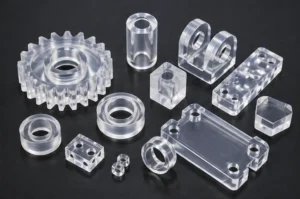
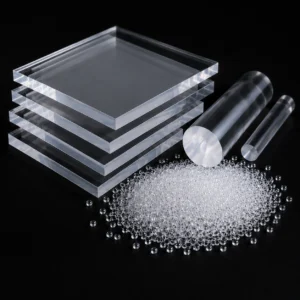
PMMA, also known as acrylic, is a transparent thermoplastic material commonly used for custom molded and machined plastic parts that require optical clarity, good surface appearance, light transmission, and weather resistance.
Acrylic material is suitable for transparent covers, display parts, light guide components, lenses, windows, panels, housings, protective covers, cosmetic parts, and custom plastic components. Compared with PC, PMMA usually provides better optical clarity and surface gloss, while PC provides better impact resistance.
Yinuo Mold can support PMMA and acrylic material review, acrylic injection molding, PMMA mold design, CNC PMMA prototype machining, low-volume production, and mass production based on customer drawings, 3D files, transparency requirements, tolerance needs, surface finish requirements, and application conditions.
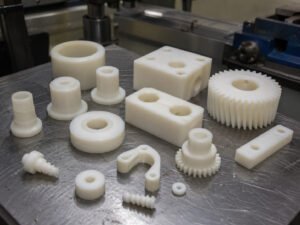
POM, also known as acetal, is an engineering plastic commonly used for precision plastic parts. It has good dimensional stability, low friction, wear resistance, and mechanical strength, making it suitable for CNC machined plastic components and functional injection molded parts.
Good Dimensional Stability
POM is suitable for parts that require stable dimensions and consistent mechanical performance.
Low Friction
POM has low-friction properties and is often used for sliding, moving, or rotating components.
Wear Resistance
POM provides good wear resistance for functional parts such as gears, bushings, rollers, and mechanical components.
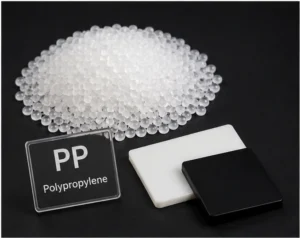
PP, also known as polypropylene, is a lightweight thermoplastic material commonly used for custom injection molded parts, functional plastic components, living hinge parts, covers, housings, containers, brackets, clips, and industrial plastic parts.
Polypropylene offers good chemical resistance, low density, fatigue resistance, electrical insulation, and cost-effective molding performance. It is widely used in consumer products, automotive parts, home appliance components, industrial equipment parts, packaging-related components, and plastic assemblies.
Yinuo Mold can support PP material selection, mold design review, plastic injection molding, prototype review, low-volume production, and mass production for custom polypropylene parts. PP can also be reviewed for CNC machining when a prototype or small batch part requires machining from PP sheet, rod, or block material.
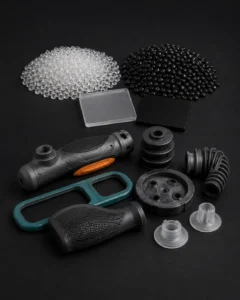
TPU and TPE are flexible rubber-like thermoplastic materials used for soft-touch, elastic, anti-slip, sealing, shock-absorbing, and protective plastic parts. Compared with rigid plastics such as ABS, PC, PP, or nylon, TPU and TPE provide better flexibility, grip feel, impact resistance, and surface comfort.
These materials are commonly used in overmolding, insert molding, injection molded rubber-like parts, soft grips, handles, seals, protective covers, connector components, electronic housings, and custom functional plastic assemblies.
Yinuo Mold can support TPU and TPE material selection, mold design review, overmolding feasibility review, trial molding, and production for custom rubber-like plastic parts. For projects requiring liquid silicone rubber or silicone rubber molding, the material and production process should be reviewed separately according to product requirements.
Material Type
Thermoplastic elastomer / rubber-like plastic
Common Materials
TPU, TPE, soft-touch elastomer materials
Hardness Range
Commonly Shore A 30–95, depending on material grade